
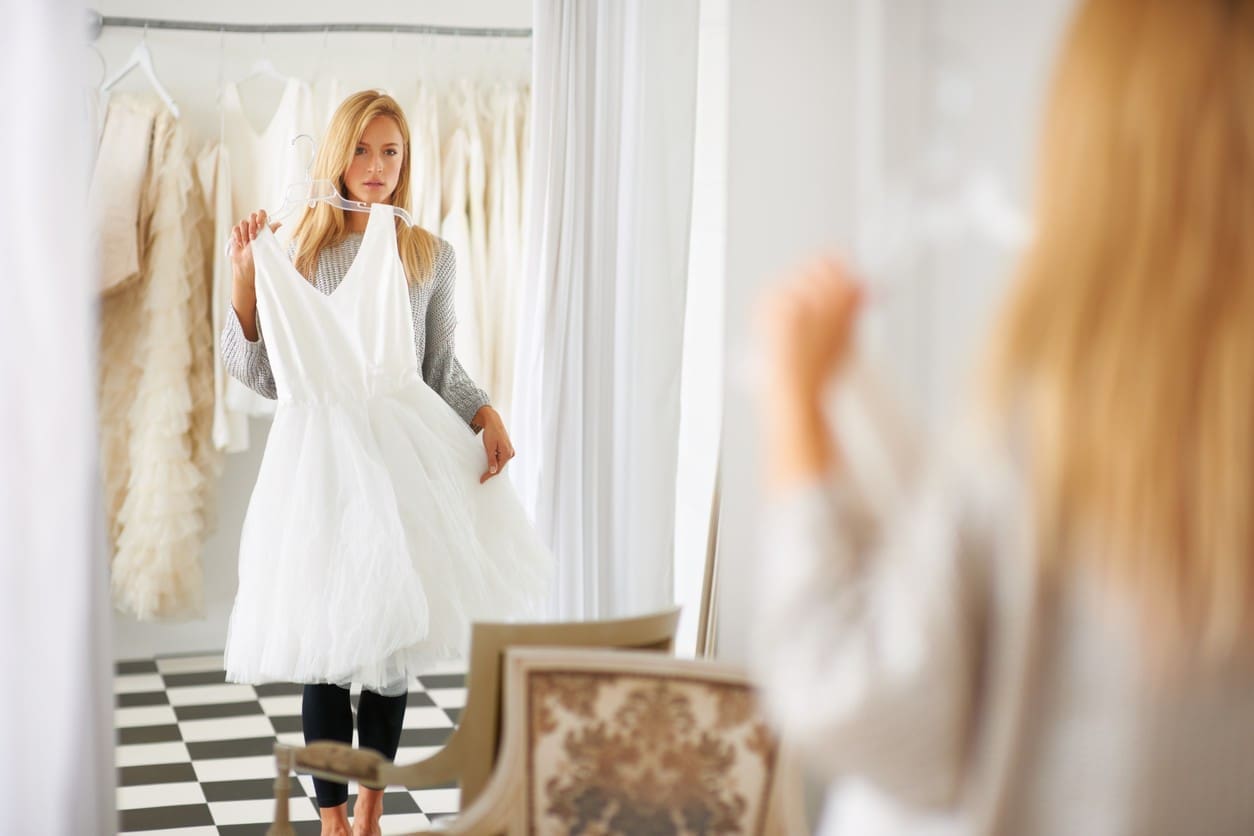
Most fit complaints never get said out loud. A shirt gets buttoned a little differently to hide a gap. A hem gets ignored because changing shoes feels easier than fixing fabric. These quiet workarounds are common enough that they’re practically universal, yet almost nobody compares notes on them.
Five specific complaints account for the vast majority of these silent adjustments, and each has a name, a clear cause, and a straightforward fix most people have simply never been told exists.
#1 of 5 | The Waistband Gaps at the Back While the Hips Fit Fine
You zip up a skirt or pair of trousers, and the hips settle comfortably into place. Then you notice the waistband standing away from the small of your back. Instead of tightening a belt or returning the garment, check if the waist simply needs reshaping.
Why does this happen?
- Standard sizes use a fixed waist-to-hip proportion.
- The hips may match the garment while the waist measures smaller.
- The waistband shape, garment rise, or posture may increase the gap.
- Sizing up usually adds more room to the hips without correcting the waist.
What can a tailor adjust?
A tailor may remove the excess through:
- The center-back seam.
- Existing or newly placed darts.
- The side seams.
- The waistband, facing, and lining.
The best method depends on the zipper, pockets, belt loops, pattern, and seam placement. The goal is to preserve the hip fit while distributing the adjustment so the waistband sits smoothly instead of creating a sharp pinch at one point.
The likely fix: A waistband take-in shaped to the garment’s proportions. Bring the shoes and base layers you normally wear with the piece so the tailor can check where the waistband naturally rests.
#2 of 5 | The Shoulders Are Too Wide, So Everything Looks Borrowed
A blazer, button-down shirt, dress, or knit top can fit through the body yet still look wrong at the shoulders. When the seam extends beyond the natural shoulder edge, the sleeves may droop and the upper body can lose its intended shape. The entire garment can end up looking borrowed or oversized.
Check the shoulder line
- Good fit: the seam meets the natural shoulder edge, and the sleeve hangs smoothly.
- Likely too wide: the seam falls onto the upper arm, while the armhole or sleeve head collapses.
- Intentional design: dropped-shoulder and oversized styles place the seam lower on purpose.
Why the alteration varies
Narrowing a shoulder may require a tailor to:
- Remove and reset the sleeve.
- Reshape the shoulder and armhole.
- Match the sleeve to the new opening.
- Rebuild any lining, padding, or internal support.
A soft, unlined piece may allow a more straightforward adjustment than a structured blazer, but construction still determines what’s possible.
The likely fix: A shoulder adjustment with possible sleeve resetting. Ask a tailor to assess the garment before assuming the shoulder seam can move without changing the sleeve or armhole.
#3 of 5 | Sleeves Are Too Long, So Nothing Looks Deliberate
Long sleeves can make an otherwise well-fitting shirt, blazer, or coat look unfinished. They may cover part of the hand, hide the shirt cuff, or bunch around the wrist. Even a small adjustment can restore a cleaner line through the arm.
Check the length with arms relaxed
- Shirt: the cuff should reach the base of the wrist without sliding over the hand.
- Traditional jacket: the sleeve usually ends high enough to reveal a small amount of shirt cuff.
- Coat or casual style: the intended length may vary, so consider its design and function.
How a tailor may shorten it
- Adjust a plain cuff or hem.
- Reposition the cuff and sleeve placket.
- Rebuild a vent or decorative buttons.
- Shorten from the shoulder when the construction and sleeve shape allow.
The likely fix: Sleeve shortening based on the cuff, lining, buttons, and vent. Bring the shirt or base layer you plan to wear underneath so the tailor can set the length accurately.
#4 of 5 | Button-Front Shirts Gape at the Bust
A button-front shirt can fit through the shoulders and waist yet open between the buttons across the chest. It’s a genuinely common complaint, and the right alteration depends on whether the closure needs support or the shirt lacks room.
Check the fabric around the buttons
- No pulling or strain lines: the shirt may have enough room, but the button spacing allows the placket to open with movement.
- X-shaped wrinkles or tightness: more ease is needed; a snap alone may hold the gap closed without correcting the underlying fit.
Possible solutions
- Adding a hidden snap or extra button.
- Repositioning a button when the placket allows.
- Letting out available seam allowance.
- Adding a discreet gusset or panel.
- Starting with a fuller-bust size, then shaping the waist through seams or darts.
The likely fix: Closure support for a small movement gap, or added room for visible pulling. Wearing the usual undergarment to the fitting helps the tailor judge the shirt over the same foundation with which it will actually be worn.
#5 of 5 | The Hem Is Wrong for Every Pair of Shoes You Own
A dress or pair of trousers may look perfectly hemmed with one pair of shoes and completely wrong with another. Switch from heels to flats, and the fabric may drag; switch from flats to heels, and the hem may suddenly look too short. Shoe height changes the garment’s distance from the floor and alters its overall proportions.
Before the fitting
- Choose the shoes worn most often.
- Bring the exact pair whenever possible.
- If alternating between two heights, bring both.
- Tell the tailor which shoe takes priority.
- Walk, turn, and sit while wearing the garment and shoes.
The likely fix: Rehem the garment for the primary shoe height. If flats and heels differ significantly, one fixed hem may not look equally balanced with both, so it’s worth deciding where the compromise makes the most sense.
Five Complaints, Five Fixes
| Complaint | The Fix |
|---|---|
| Waistband gaps at the back | Take in and reshape the waistband through the appropriate seams or darts. |
| Shoulders sit too wide | Narrow the shoulder and reset the sleeve when the construction permits. |
| Sleeves run long | Shorten at the cuff, hem, or shoulder, depending on the design. |
| Button-front gapes at the bust | Add closure support when there’s enough room, or create more ease when the fabric pulls. |
| Hem looks wrong with your shoes | Rehem it while wearing the pair that matters most. |
What These Actually Take in Time
Most of what’s on this list is a single, short visit:
- Waistband take-in.
- Hem adjustment.
- Moved or added button.
- Shortened sleeves on a soft shirt or dress.
None of these need a second fitting. The garment gets dropped off, or pinned on the spot, and it’s done.
The exceptions are structural: reshaping the shoulder on a fully lined, canvassed jacket, or any adjustment that reworks a garment’s internal support. These take longer and usually call for a second fitting to check the result, which is worth knowing going in so a five-minute expectation doesn’t run into a job that genuinely needs more time.
Which One to Fix First
If you recognize yourself in more than one of these, don’t start with the piece that fits the worst. Start with the one you’d actually wear tomorrow if it fits properly.
That’s where the alteration earns itself back immediately. A perfectly altered dress with no occasion to wear it still sits in the closet unworn. The shirt reached for twice a week, fixed, went straight back into rotation. That’s the real answer to how to make clothes fit better without overhauling everything at once: fix what actually gets used, then work outward from there.
Have a Piece You Want to Wear Again? Bring It to Faulkner’s Dry Cleaning and Laundry
You don’t need to start by emptying your entire closet. Choose one dress, pair of trousers, skirt, or jacket you’d happily wear tomorrow if the waist, sleeves, hem, or overall shape fit the way you wanted.
Bring that piece to Faulkner’s Dry Cleaning and Laundry for professional alterations and repair services in Lake Highlands. Our team evaluates the garment’s construction and focuses on the specific adjustments that can improve its fit and proportions. If the garment requires hemming, bring the shoes you plan to wear with it, since heel height can influence the finished length.
If you’ve been searching for alterations near the Lake Highlands area of Dallas, start with the one piece you’d most like to put back into rotation.
Address: 4225 Oak Lawn Ave., Dallas, TX, 75219
Phone: (214) 521-1100
Email: info@faulknercleaners.com
Hours: Monday to Friday, 7:00 AM to 6:00 PM. Saturday, 8:00 AM to 5:00 PM. Sunday, closed.